 INR (₹)


SAPIENS: A Collective Reflection on Being Human- IndiGalleria’s Landmark Group Show at Bikaner House
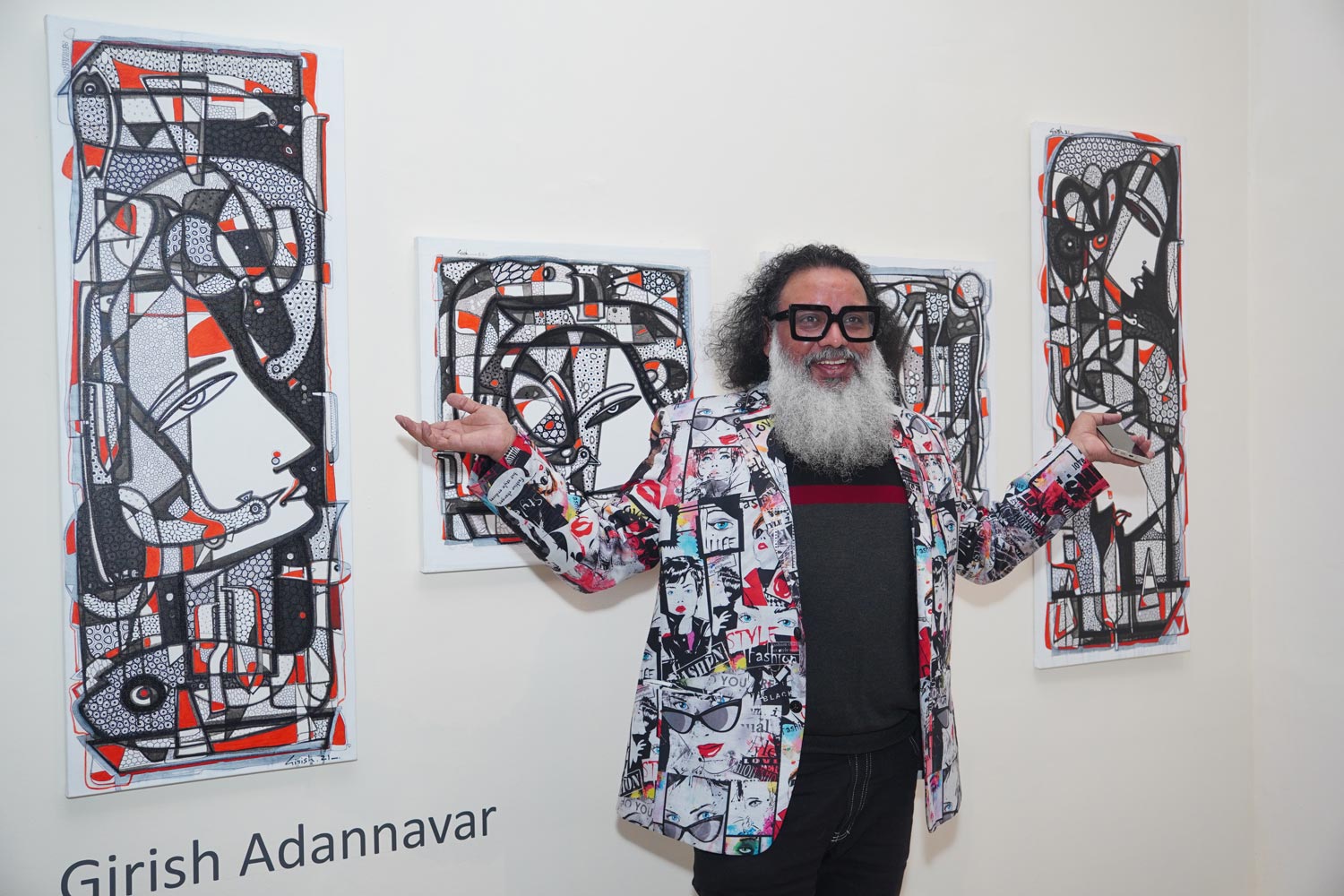
In December 2025, IndiGalleria marked a defining moment in its curatorial journey with SAPIENS, a thoughtfully curated group exhibition held at Bikaner House, New Delhi. Hosted at the historic Kalamkar Gallery from 5th to 14th December 2025, the exhibition brought together 17 accomplished contemporary Indian artists, creating a layered and deeply resonant dialogue on what it means to be human today.
More than a showcase of artworks, SAPIENS unfolded as a shared experience where generations, geographies, materials, and philosophies converged. The exhibition reaffirmed IndiGalleria’s commitment to building meaningful connections between artists, audiences, and ideas, while strengthening its presence in the physical exhibition space after years of impactful digital engagement.
The Vision Behind SAPIENS
Conceptualised and organized by Shashank Maurya, SAPIENS emerged from a simple yet profound inquiry: how do contemporary artists interpret human existence in an ever-evolving world?
Curated by Aakshat Sinha, with co-curation by Harmandeep Keerti, the exhibition was designed as a confluence rather than a contrast. As articulated in the curator’s note, the intention was not to force a single narrative, but to allow individual voices figurative, semi-abstract, and abstract to breathe, intersect, and resonate with one another.
The result was a cohesive visual conversation spanning acrylics, oils, watercolours, printmaking, sculpture, mixed media, and experimental techniques, all bound together by shared emotional and philosophical undercurrents: identity, memory, movement, resilience, and belonging.
A Space That Held the Dialogue
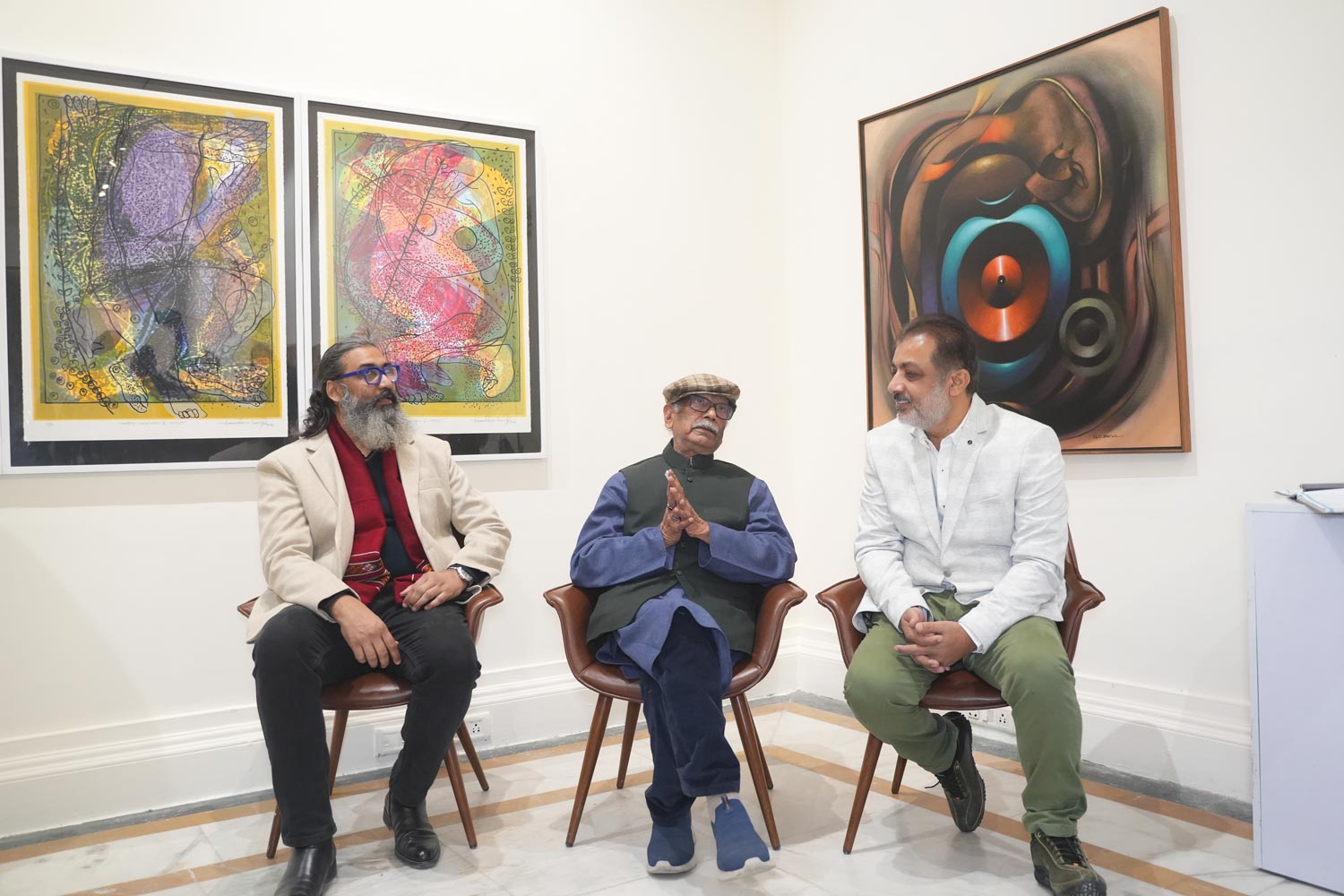
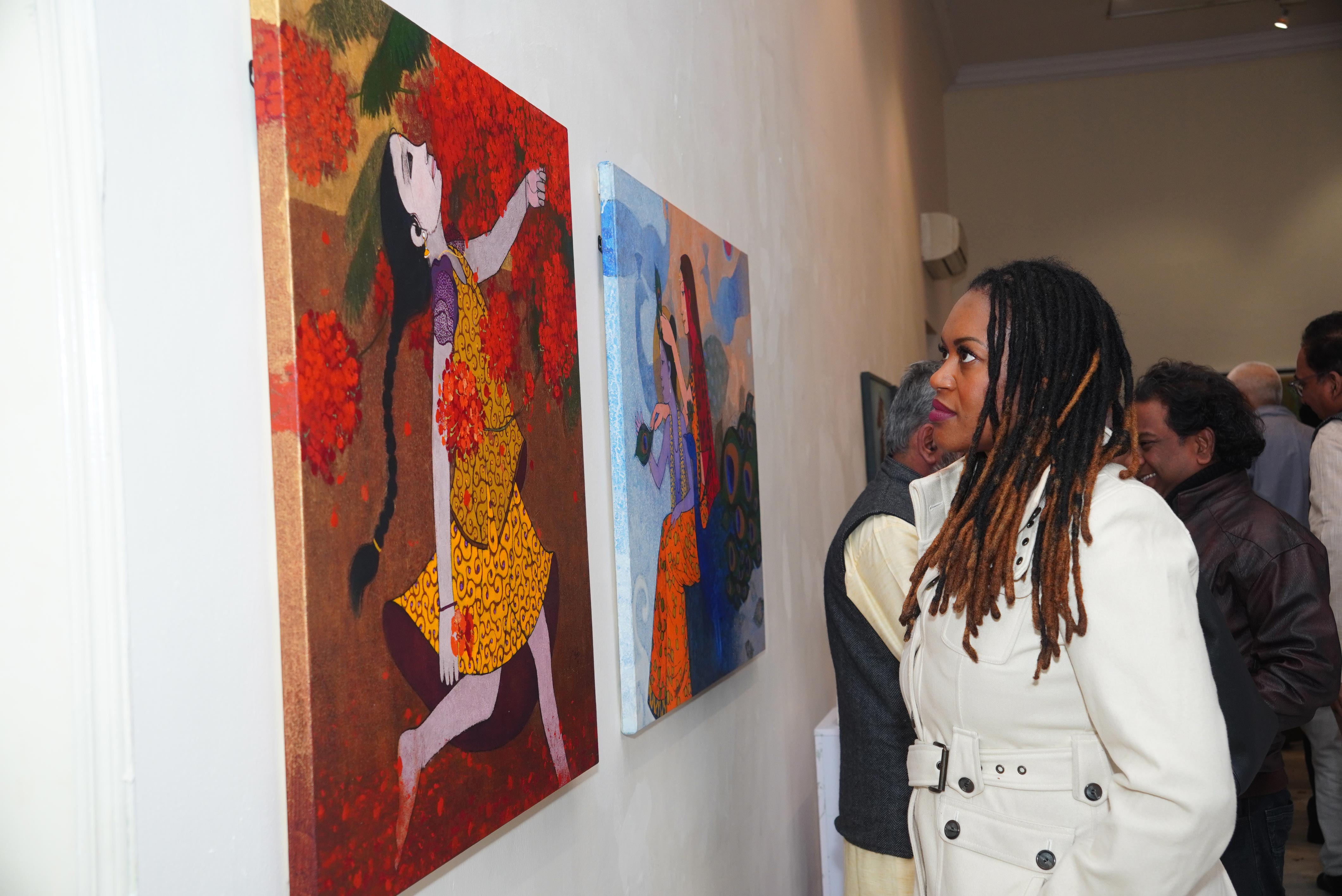
Bikaner House, with its colonial architecture and cultural gravitas, proved to be an ideal setting. The Kalamkar Gallery’s spatial rhythm allowed each artwork its own presence while maintaining an organic flow across the exhibition. Visitors moved slowly, pausing often, an unspoken sign that the works demanded contemplation rather than quick consumption.
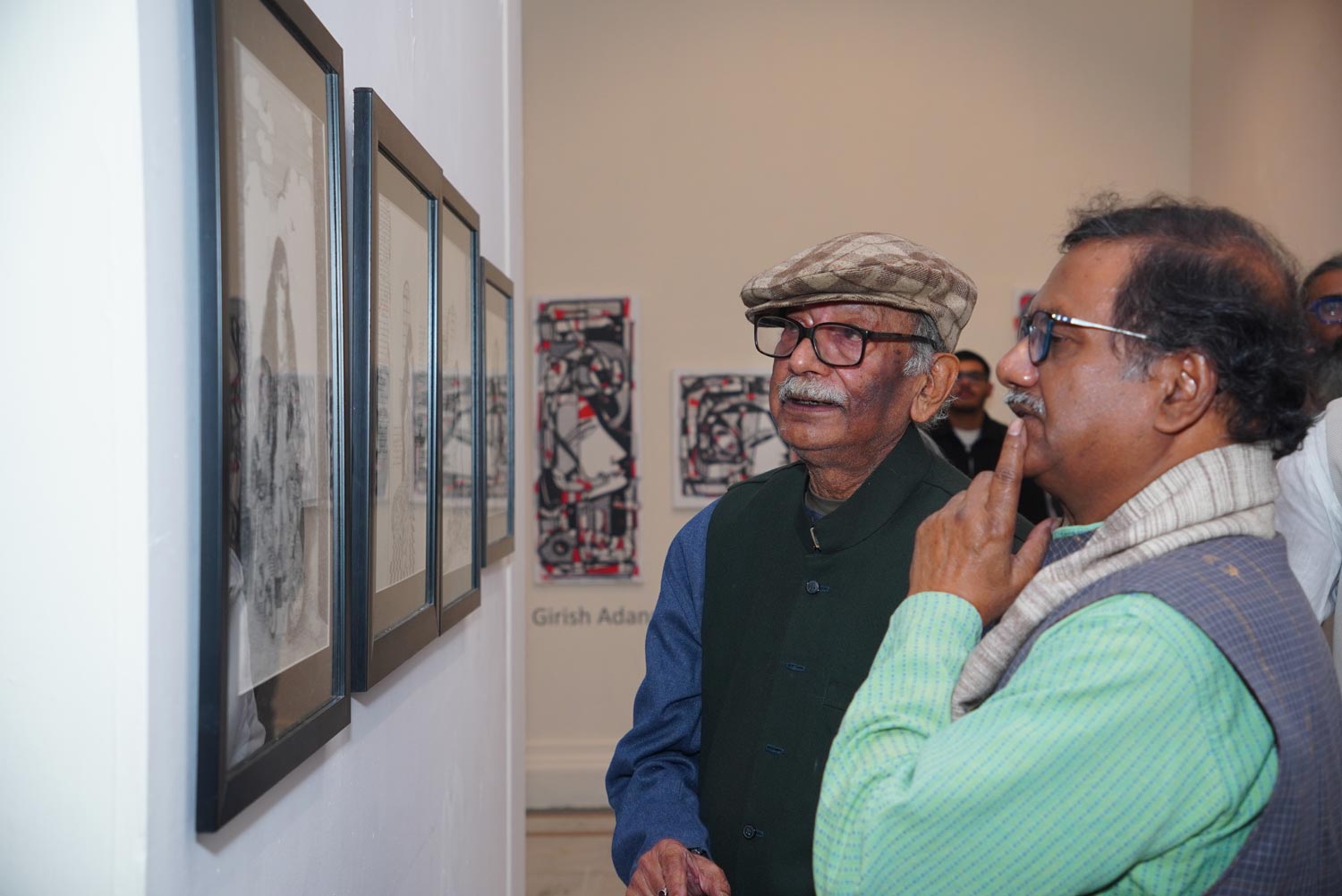
From the opening evening through the final days, the exhibition saw a steady and engaged footfall comprising artists, collectors, academicians, diplomats, students, and cultural practitioners. Conversations extended beyond the gallery walls, continuing in corridors, courtyards, and long after visitors had left the space.
The Artists: A Spectrum of Voices
Senior Masters and Academic Pillars
The exhibition was anchored by the presence of senior artists whose practices have shaped Indian contemporary art and art education.
Niren Sengupta, former Principal of the College of Art, Delhi, brought with him decades of pedagogical and artistic insight, embodying a lineage of rigorous practice and intellectual discipline.
Ananda Moy Banerjee, Senior Artist and Vice Principal of South Delhi Polytechnic for Women, presented works rooted in printmaking traditions yet contemporary in thought, bridging technique, narrative, and modern sensibility.
Similarly, Ashwani Kumar Prithviwasi, Principal of Delhi College of Art, contributed works that reflected both academic depth and expressive clarity.
Dialogues Across Generations
One of the most compelling aspects of SAPIENS was its intergenerational dialogue.
The senior artist duo Tirthankar Biswas and Anamika Biswas presented works that explored movement, human emotion, and layered symbolism, demonstrating how decades of practice can remain fluid, responsive, and relevant.
Their works conversed seamlessly with those of younger and mid-career artists, reinforcing the exhibition’s central idea: that human experience is both personal and collective, timeless and evolving.
Contemporary Practices and Diverse Expressions
Artists such as Ravi Goswami and Sajal Patra brought distinct visual vocabularies that expanded the exhibition’s emotional range, moving between introspection, abstraction, and lived realities.
Manish Kumar occupied a unique position at the intersection of art and popular discourse, drawing attention to how contemporary visual culture interacts with broader media narratives.
The curatorial strength of SAPIENS lies in how these diverse practices, ranging from quiet minimalism to expressive dynamism, coexisted without hierarchy, each adding a necessary voice to the collective whole.
The Opening: A Confluence of Art, Culture, and Conversation
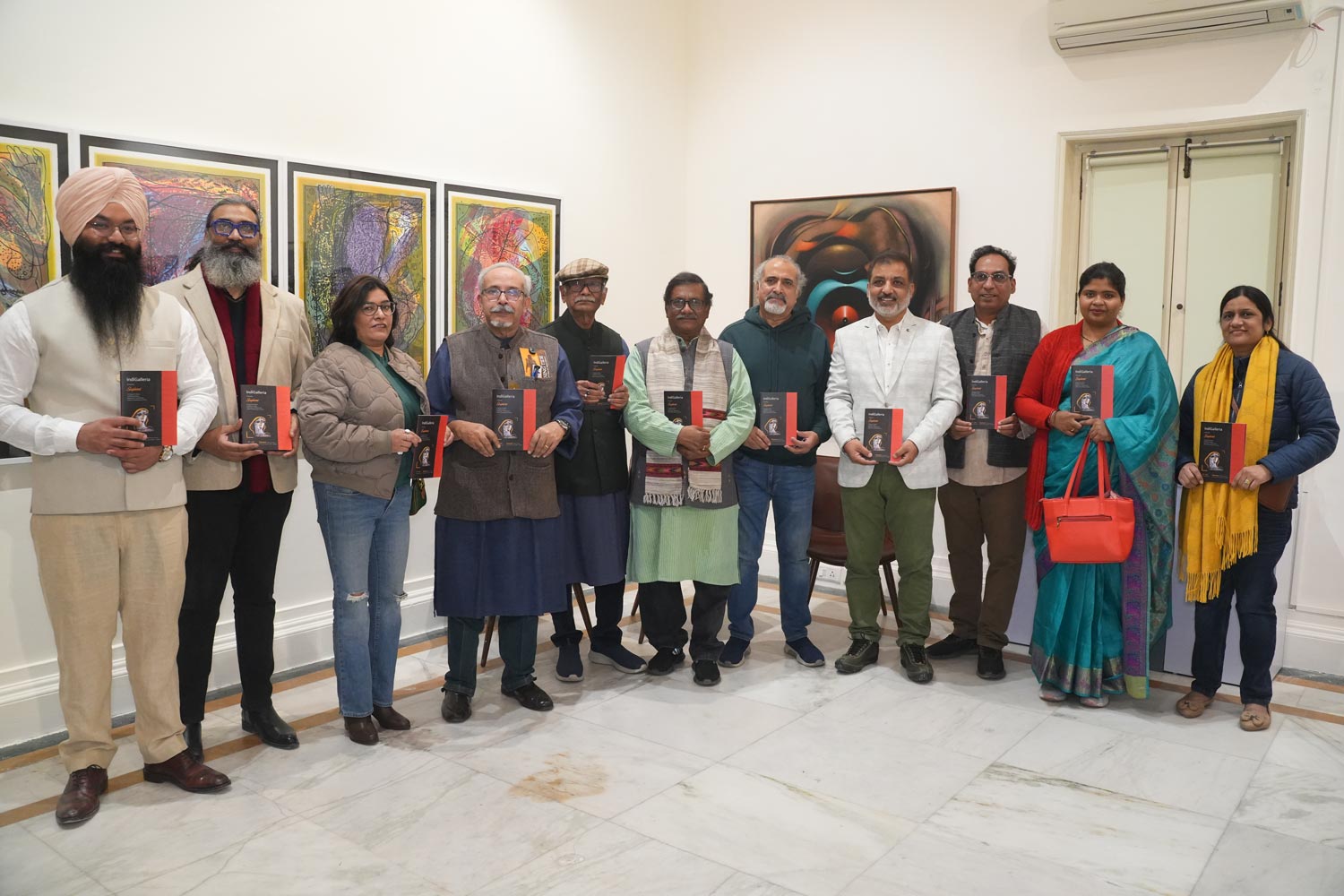
The opening evening was marked by a distinguished gathering of guests from across the cultural spectrum. Alongside participating artists, the exhibition welcomed curators, institutional leaders, and industry figures who lent their presence and voices to the occasion.
Notable guests included Shambhu Nath Goswami, whose curatorial sensibility added depth to conversations around practice and process, and Kamal Seth, whose association highlighted the important relationship between art, industry, and creative tools.
The presence of such figures reinforced the exhibition’s role not merely as a display of artworks but as a meeting ground for ideas, mentorship, and future collaborations.
Audience Response and Critical Reception
Throughout its duration, SAPIENS was met with an overwhelmingly positive response. Visitors frequently remarked on the exhibition’s emotional coherence despite stylistic diversity, a testament to thoughtful curation.
Students from art institutions spent extended hours sketching, observing, and engaging with the works, while seasoned collectors appreciated the balance between established names and evolving practices. Conversations often centred on how the exhibition felt “human” in the truest sense, introspective without being insular, expansive without being overwhelming.
For many, SAPIENS stood out as a reminder that group shows, when curated with intention, can offer richer insights than solo narratives.
IndiGalleria’s Growing Curatorial Identity
With SAPIENS, IndiGalleria reaffirmed its evolving role in India’s contemporary art ecosystem. What began as a digital platform has steadily grown into a gallery that values physical presence, curatorial depth, and long-term artist relationships.
This exhibition followed closely on the heels of IndiGalleria’s landmark solo show of Raja Segar, further underscoring the gallery’s commitment to both international cultural exchange and robust domestic programming. Together, these exhibitions signalled a phase of confident expansion, one rooted in quality, integrity, and dialogue.
Looking Ahead
SAPIENS was not an endpoint; it was a beginning. It set the tone for future exhibitions that IndiGalleria envisions across cities, contexts, and borders. By bringing together senior masters, mid-career practitioners, and diverse contemporary voices under one roof, the exhibition demonstrated what is possible when curation is driven by empathy and intellect rather than trends.
As the doors of Kalamkar Gallery closed on the final day, what remained were conversations sparked, relationships strengthened, and a shared sense that art, at its best, mirrors us back to ourselves.
In Reflection
SAPIENS asked viewers to pause, feel, and connect with art, with humanity, and with their own lived experiences. In doing so, it stood as a powerful testament to IndiGalleria’s vision: to celebrate original art that is thoughtful, inclusive, and deeply human.