 INR (₹)



Introduction
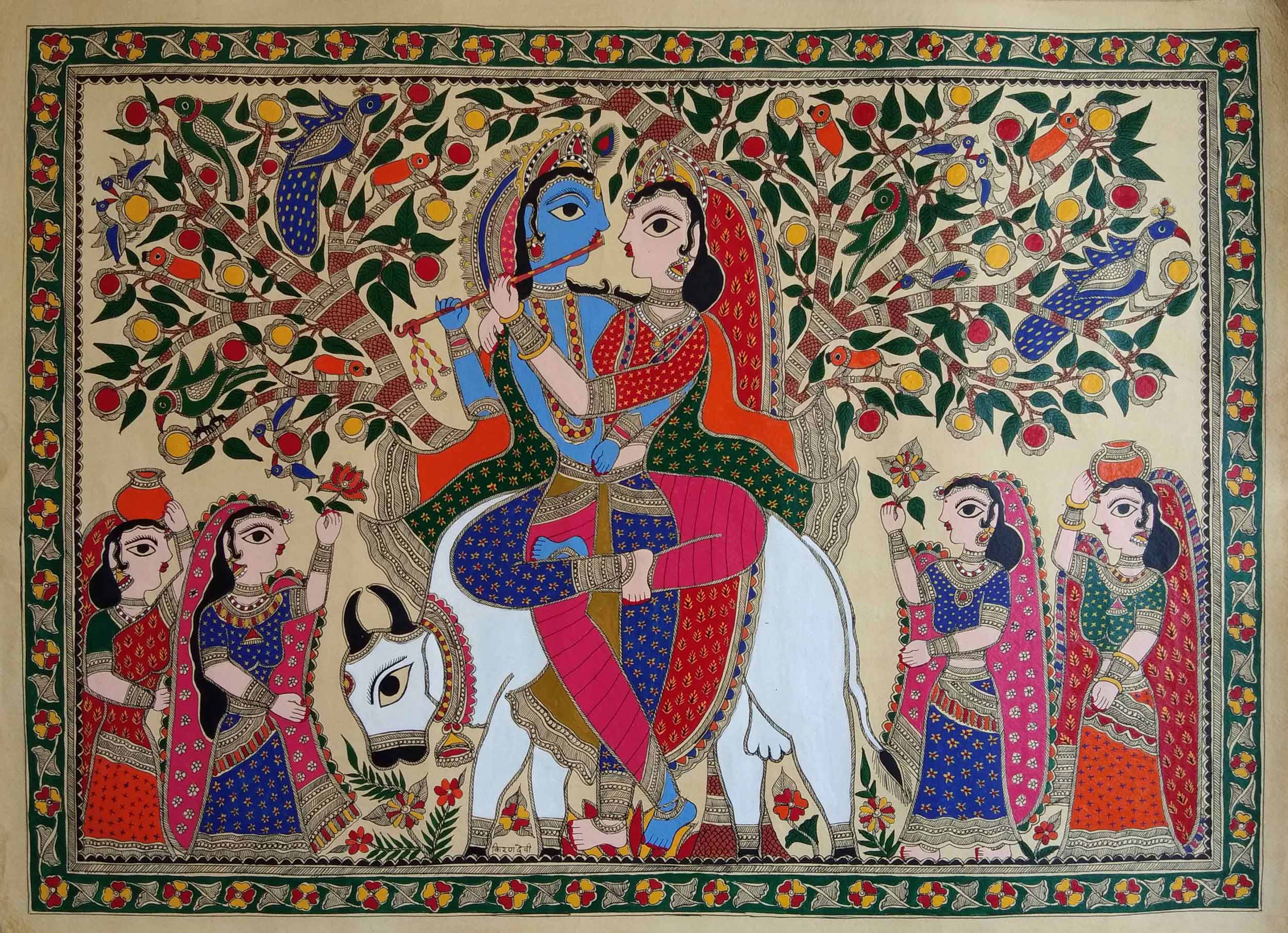
Madhubani Painting, also known as Mithila Art, is one of India's oldest and most vibrant folk-art traditions. Originating in the Mithila region of Bihar, this intricate and colorful art form has been passed down for generations, mostly by women who painted on the walls and floors of their homes during weddings, festivals, and rituals.
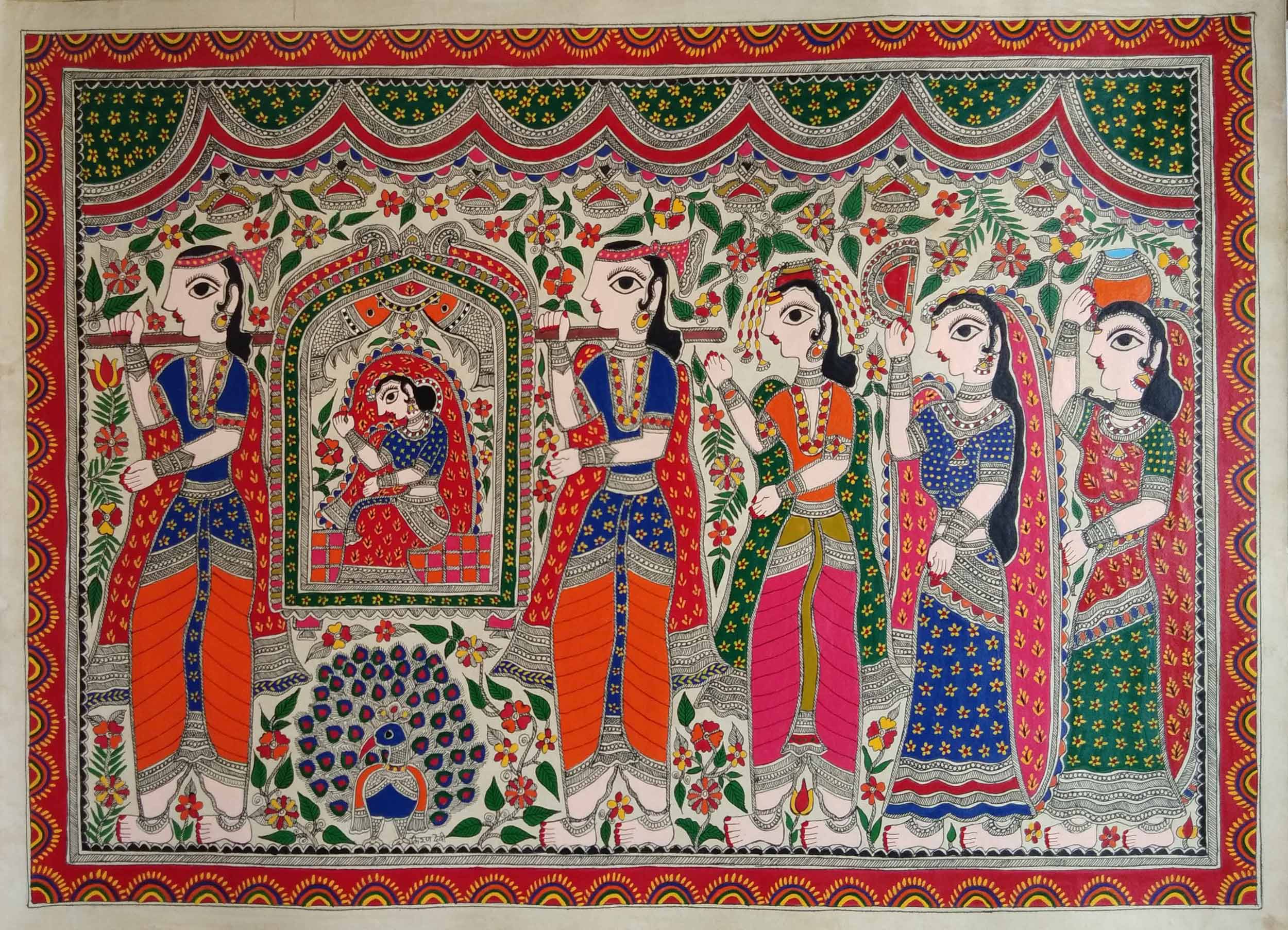
Bride in Doli
A Story in Every Stroke
The painting above shows a scene from a traditional Vidaai (farewell) ceremony. The bride is seen leaving for her Sasural (in-laws’ home), carried in a Doli (palanquin). This age-old tradition still exists in some villages of Bihar.
The artwork, filled with emotion and cultural depth, was created by the late Srimati Kiran Devi, a respected Madhubani artist known for her attention to detail and storytelling through art. Two of her paintings are available at IndiGalleria, preserving her legacy.
Where It All Began
Madhubani art is believed to have originated during the time of the Ramayana. Legend says that King Janaka, father of Goddess Sita, asked artists to decorate the palace walls with paintings for Sita's wedding to Lord Rama. This marked the beginning of a tradition that continues even today.
Interestingly, Madhubani art was rediscovered in 1934 by a British officer after an earthquake in Bihar. While assessing damage, he noticed stunning paintings on the walls of rural homes.
Material and Methods
Madhubani art is known for its natural materials and eco-friendly techniques:
- Canvas: Traditionally done on mud walls, now on handmade paper, cloth, or canvas.
- Tools: Twigs, fingers, matchsticks, or pen nibs.
- Colors: Made from natural ingredients:
- Black: charcoal or soot
- Yellow: turmeric
- Red: sandalwood
- Blue: indigo
- Green: leaves
- White: rice paste
These paintings are outlined first, then filled with bold colors. One unique feature is that no space is left blank, gaps are filled with patterns like flowers, vines, and geometric shapes.
Themes in Madhubani Art
The stories in Madhubani art come alive through:
- Mythology: Ramayana, Mahabharata, Krishna Leela
- Nature: birds, animals, trees, sun, moon
- Rituals: weddings, festivals, religious events
- Messages: women’s empowerment, environmental awareness, social harmony
Each painting isn’t just decorative, it’s symbolic. For example, fish symbolize fertility and good luck, lotuses stand for purity, and peacocks for love and romance.
Art on the Move: Madhubani Railway Station
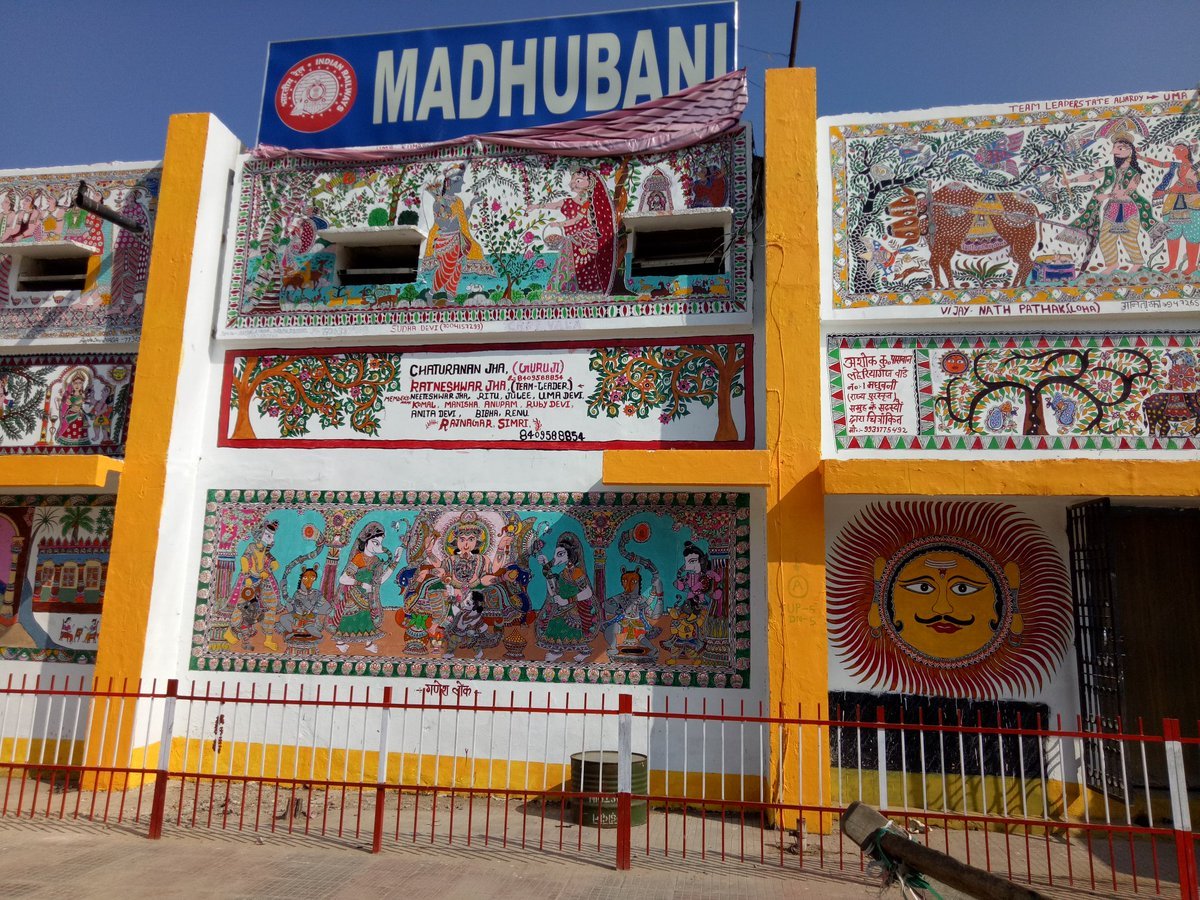
Madhubani Railway Station exterior
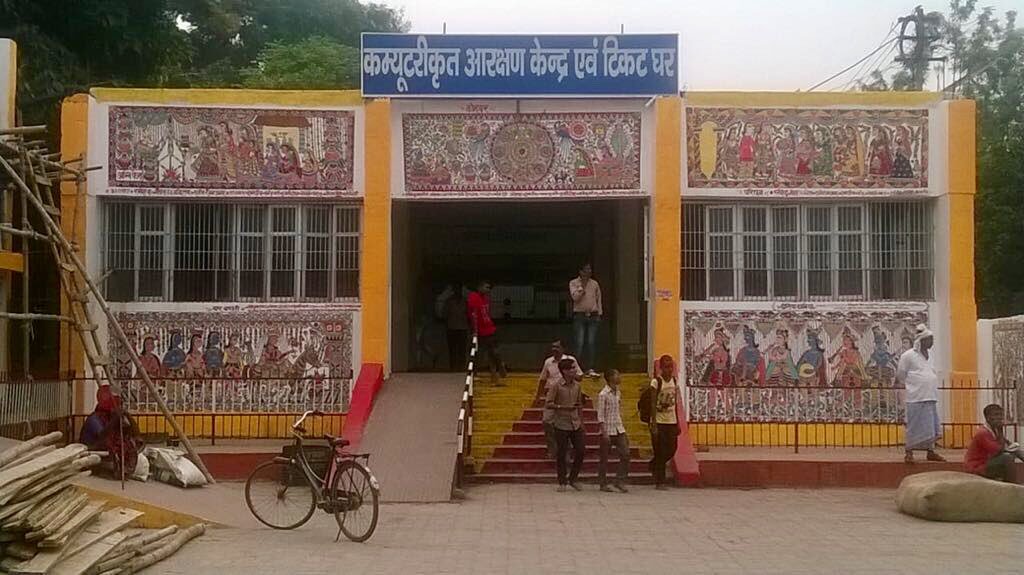
Reservation Centre painted with Madhubani art
A proud moment for local artists was the transformation of Madhubani Railway Station into a massive canvas of Mithila art. Hundreds of artists came together to decorate the station with traditional motifs. It’s now known as one of the largest public exhibits of Madhubani art and is believed to be a potential Guinness World Record holder.
This initiative not only beautified the station but also promoted local art, boosted tourism, and empowered women artists in the region.
Conclusion: A Legacy in Color
Madhubani painting is more than just an art form; it's a living tradition that continues to evolve. From palace walls in ancient Mithila to paper scrolls, sarees, and railway stations, this colorful storytelling style is finding its place on the global stage.
By learning about, buying, and sharing Madhubani art, we can all play a role in preserving this priceless heritage for future generations.