Artworks
Featured Artist
- Legend Artists
- Loading...
- Established Artists
- Loading...
- Upcoming Artists
- Loading...
 INR (₹)
Welcome: Guest
To access account & manage orders


Return Policy
At IndiGalleria, we always ensure that the artwork you see is the artwork you receive. If you have any doubts or concerns, you can request additional images or videos of the artwork before placing your order.
Order Cancellation
Typically, once an order is placed, it cannot be canceled. However, we do allow cancellations within 24 hours of placing the order. Since processing begins immediately, please contact us as soon as possible if you wish to cancel.
Note: Once the order has been dispatched, cancellations are no longer possible. However, free cancellation may still be allowed upon request if the artwork has not yet been shipped.
Return Request
A buyer may return a piece only if it is received in a damaged condition. The damage must be reported within 72 hours of receiving the order, and the artwork must be shipped back within 7 days of delivery.
For full details, please refer to our Cancellation and Refund Policy.
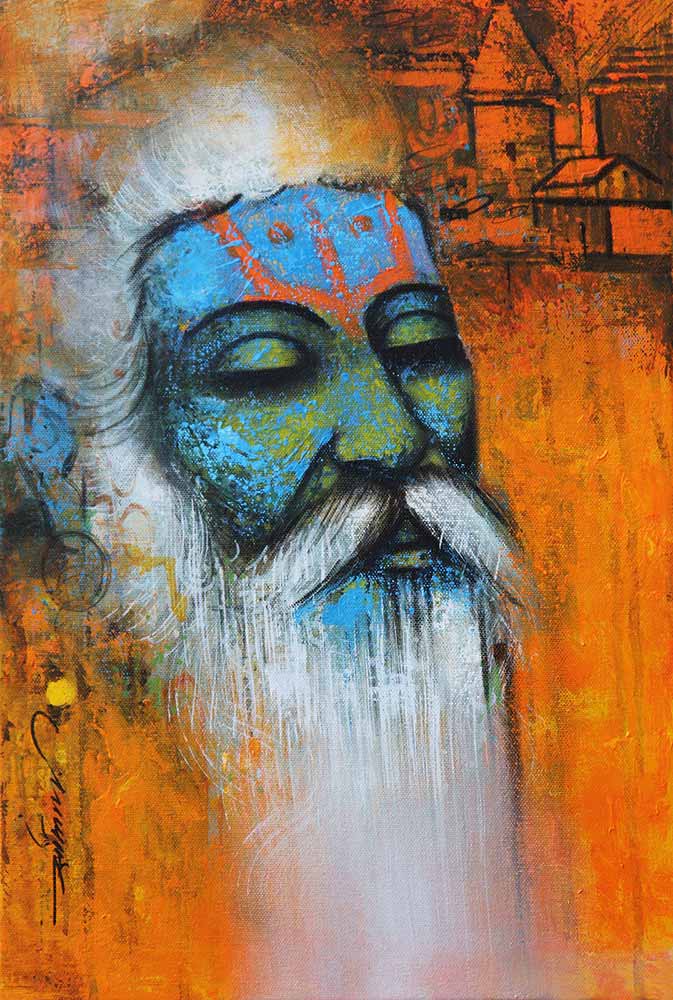
Acrylic on Canvas
A Sadhu or Sant is an ascetic and holy person in Hindu tradition who renounces worldly life in search of spiritual enlightenment. A Sadhu gives up the three primary goals of human life:
By renouncing these pursuits, Sadhus dedicate themselves to attaining Moksha, liberation from the cycle of birth and rebirth. This spiritual state is achieved through lifelong discipline, including yoga, meditation, ritual worship, and devotion to God.
In Hinduism, Sadhus are broadly classified into two main traditions:
Apart from these, there are many sub-sects and spiritual lineages followed by Sadhus across India.
One of the most well-known and revered groups is the Naga Sadhu sect. Naga Sadhus are known for their austere lifestyle and appearance. They often remain unclothed, cover their bodies with sacred ash, and keep long, matted hair resembling dreadlocks. Their way of life symbolizes complete renunciation of material comforts and social identity.
Naga Sadhus usually reside in remote regions of the Himalayas, but they gather in large numbers during major religious festivals. They are commonly seen in cities such as Haridwar, Ujjain, Prayagraj, and Nashik during the Kumbh Mela.
Their spiritual discipline, simplicity, and devotion make them one of the most prominent and fascinating symbols of India’s spiritual heritage.