Artworks
Featured Artist
- Legend Artists
- Loading...
- Established Artists
- Loading...
- Upcoming Artists
- Loading...
 INR (₹)
Welcome: Guest
To access account & manage orders


Return Policy
At IndiGalleria, we always ensure that the artwork you see is the artwork you receive. If you have any doubts or concerns, you can request additional images or videos of the artwork before placing your order.
Order Cancellation
Typically, once an order is placed, it cannot be canceled. However, we do allow cancellations within 24 hours of placing the order. Since processing begins immediately, please contact us as soon as possible if you wish to cancel.
Note: Once the order has been dispatched, cancellations are no longer possible. However, free cancellation may still be allowed upon request if the artwork has not yet been shipped.
Return Request
A buyer may return a piece only if it is received in a damaged condition. The damage must be reported within 72 hours of receiving the order, and the artwork must be shipped back within 7 days of delivery.
For full details, please refer to our Cancellation and Refund Policy.
Mixed Media
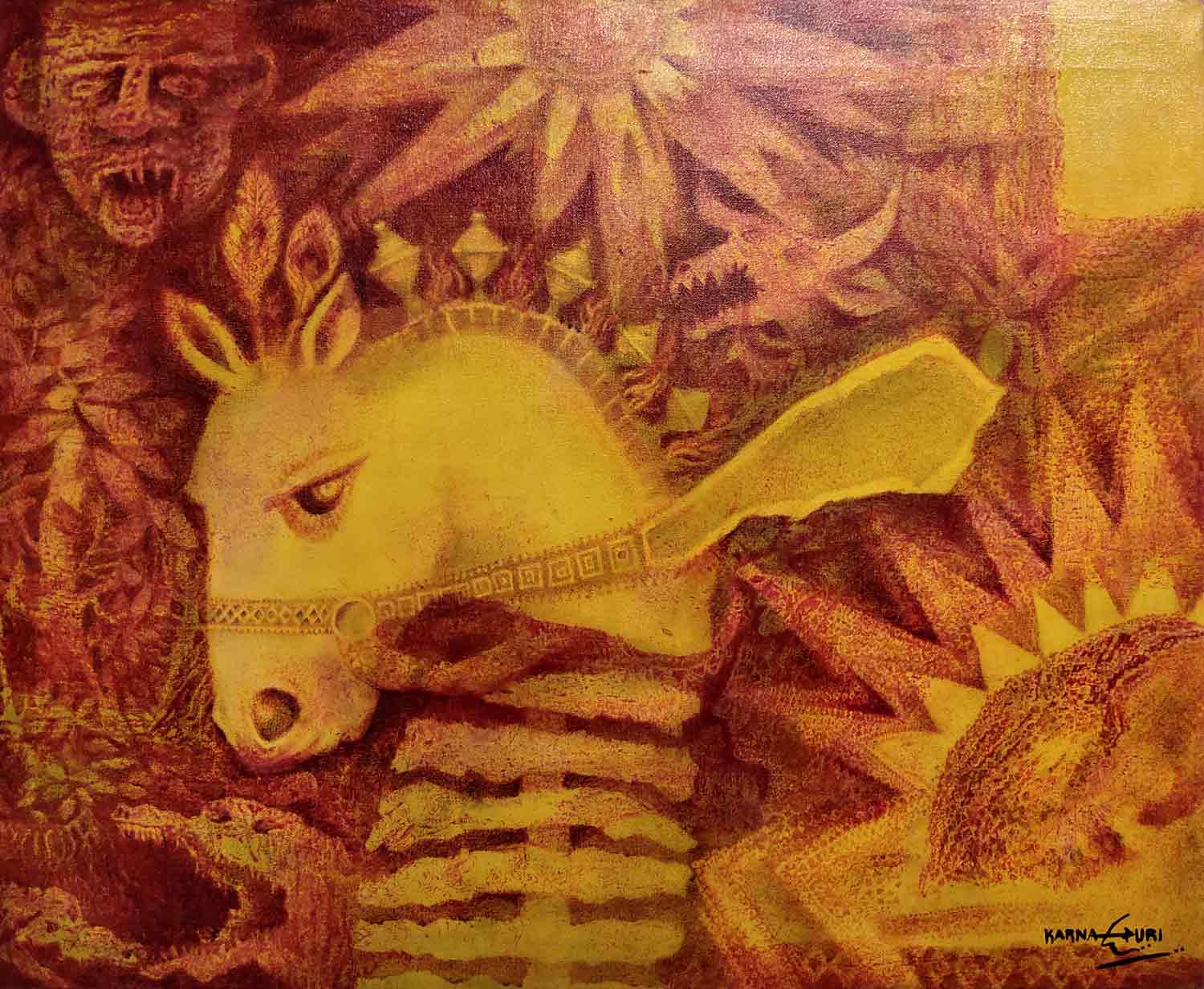
What is the Meaning of Ashwamedha?
Ashwamedha is a Sanskrit term that translates literally to “horse sacrifice.” It was one of the most grand and powerful rituals performed in ancient Hinduism, particularly during the Vedic period. This royal rite was conducted by kings to assert their supreme authority, expand their influence, and symbolically unify their dominion.
The ritual involved releasing a consecrated horse to wander freely for a year, accompanied by royal warriors. The lands the horse passed through were given a choice: either accept the authority of the king or challenge it through battle. If unchallenged, the territories were deemed to come under the king's rule. At the end of the journey, the horse would return and be ritually sacrificed in a complex and sacred ceremony.
The Ashwamedha was far more than a political statement; it was a spiritual and cosmic affirmation of the king’s dharma (righteous duty), sovereignty, and alignment with divine order. It symbolized the harmony between earthly rule and celestial will, positioning the king as both protector and servant of the divine cosmic order.